

Model Universe Blog, Diecast Models, Discovery Articles, Guides
Are Diecast Models a Good Investment in 2026?
By Model Universe | May 2026 | 8 min read
If you’ve ever wondered whether your diecast collection is worth more than just the shelf space it takes up — you’re not alone. More collectors are asking: can diecast models actually make money?
The short answer is yes — but only if you know what you’re doing. This guide breaks down exactly which models hold value, which brands to focus on, and what the market looks like in 2026.
The Diecast Market in 2026: A Quick Overview
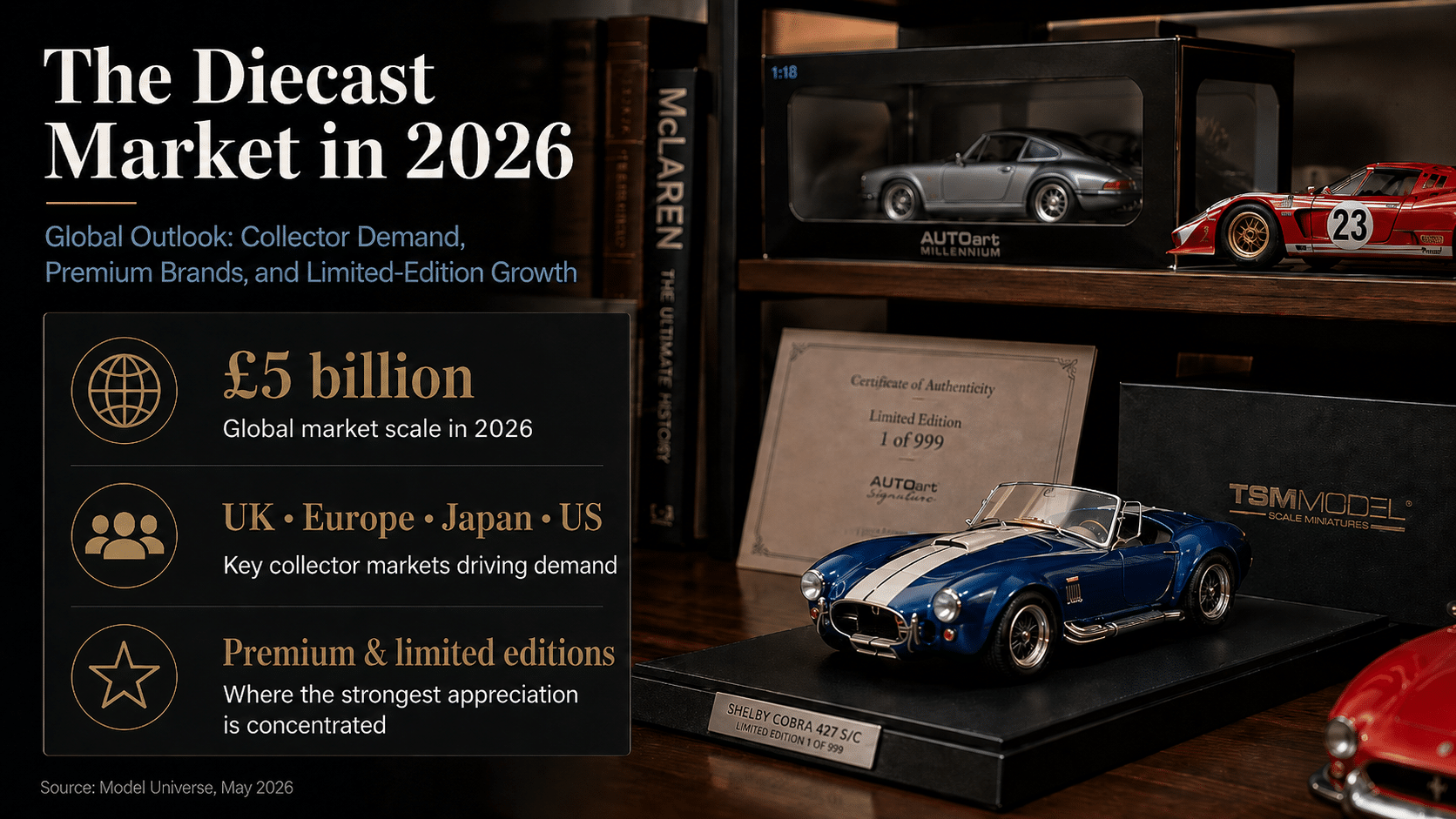
The global diecast model car market is worth hundreds of millions of pounds and growing year on year — driven largely by collectors in the UK, Europe, Japan, and the US competing for the same limited stock. That’s steady, consistent expansion that puts it firmly in the same category as other collectible asset classes.
But raw market size doesn’t tell the whole story. The real action is in the premium and limited-edition segment, where serious collectors and investors compete for low-production models from brands like AUTOart, Minichamps, GT Spirit, GP Replicas, and CMC.
Do Diecast Models Actually Appreciate in Value?
Yes — but selectively. Not every model you buy today will be worth more in five years. The diecast models that consistently appreciate share a handful of characteristics:
1. Limited Production Runs
Scarcity is the single biggest driver of value. A model produced in a run of 500 units will almost always outperform one produced in 5,000. Manufacturers like Top Marques and CMC regularly produce editions under 1,000 units globally, and once they sell out, the secondary market takes over.
2. Mint Condition with Original Packaging
A model in perfect condition, in its original box with all documentation, can command a 20% or higher premium over a loose or damaged equivalent. Some serious investors never open the box at all.
3. Brand Reputation
Not all diecast is equal. Premium brands with a reputation for exceptional detail and quality tend to hold their value far better than mass-market alternatives. More on this below.
4. The Car It Represents
Models of iconic vehicles — Ferrari F40, Lamborghini Countach, classic Le Mans racers, legendary F1 cars — attract the most collector interest. If the real car commands passion, the model follows suit.
5. Discontinued Models
Once a manufacturer stops producing a particular model, the only way to get one is the secondary market. That’s when prices climb.
Real-World Examples: The Numbers
These aren’t just theoretical possibilities. Here are real examples of diecast appreciation:
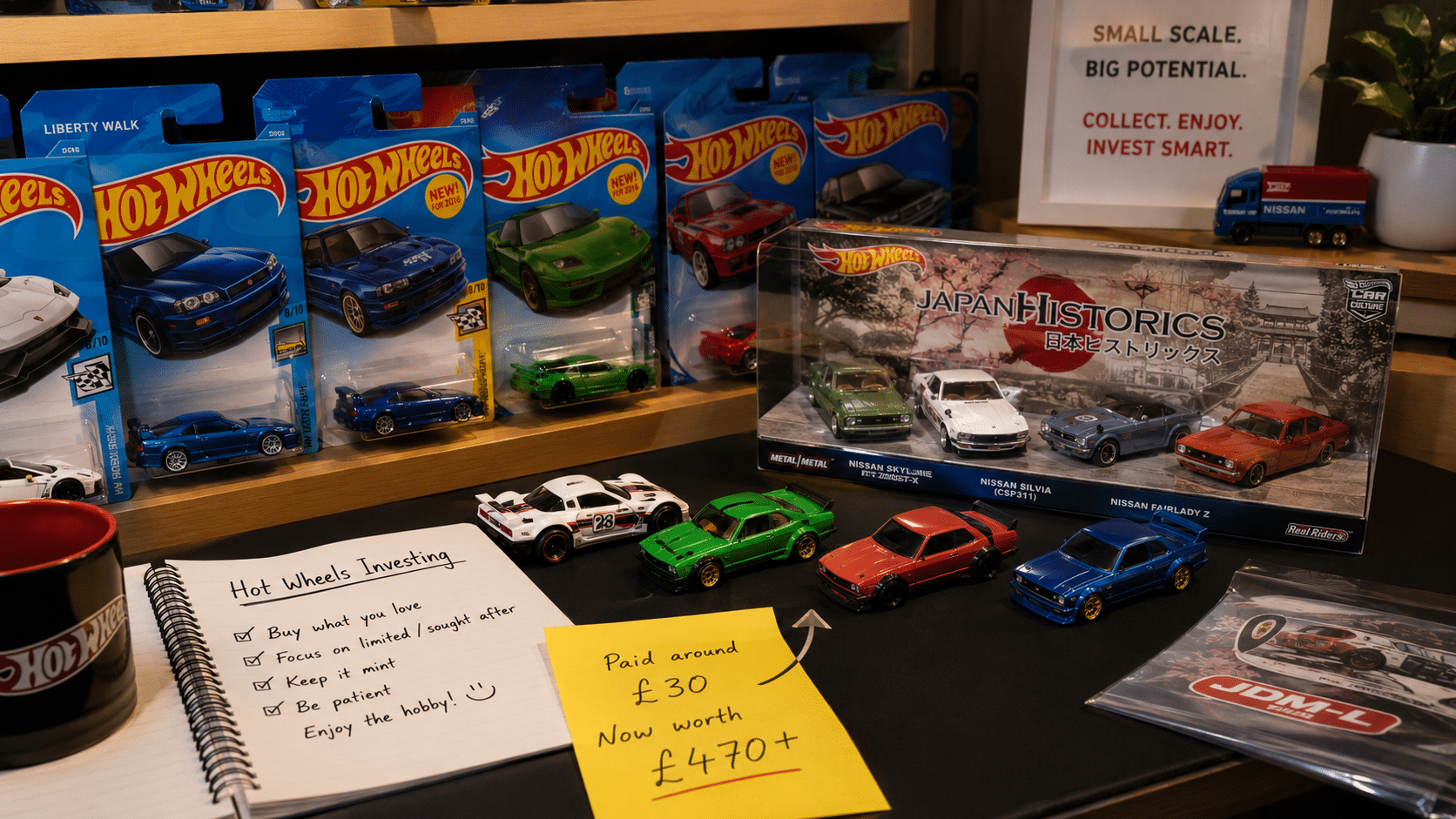
- A Hot Wheels Japan Historics set from 2016, originally retailing at around £30, now fetches over £470 on the resale market — a 1,400%+ increase in under a decade.
- The 1969 Hot Wheels Pink Beach Bomb prototype has sold for over £135,000 — it’s the holy grail of diecast collecting.
- Pre-war Dinky Toys in original condition regularly sell for £10,000–£20,000+ at specialist auction.
- High-end resin and diecast luxury models — such as the Robert Gulpen Engineering Gold Edition Lamborghini Aventador — have sold for over £5.5 million, proving that at the ultra-premium end, the sky’s the limit.
These are extreme examples, of course. But even at the everyday collector level, well-chosen premium models routinely sell for 2–3x their original retail price within a few years.
Which Brands Are the Best Investment?
GT Spirit & Otto Mobile — Limited Production
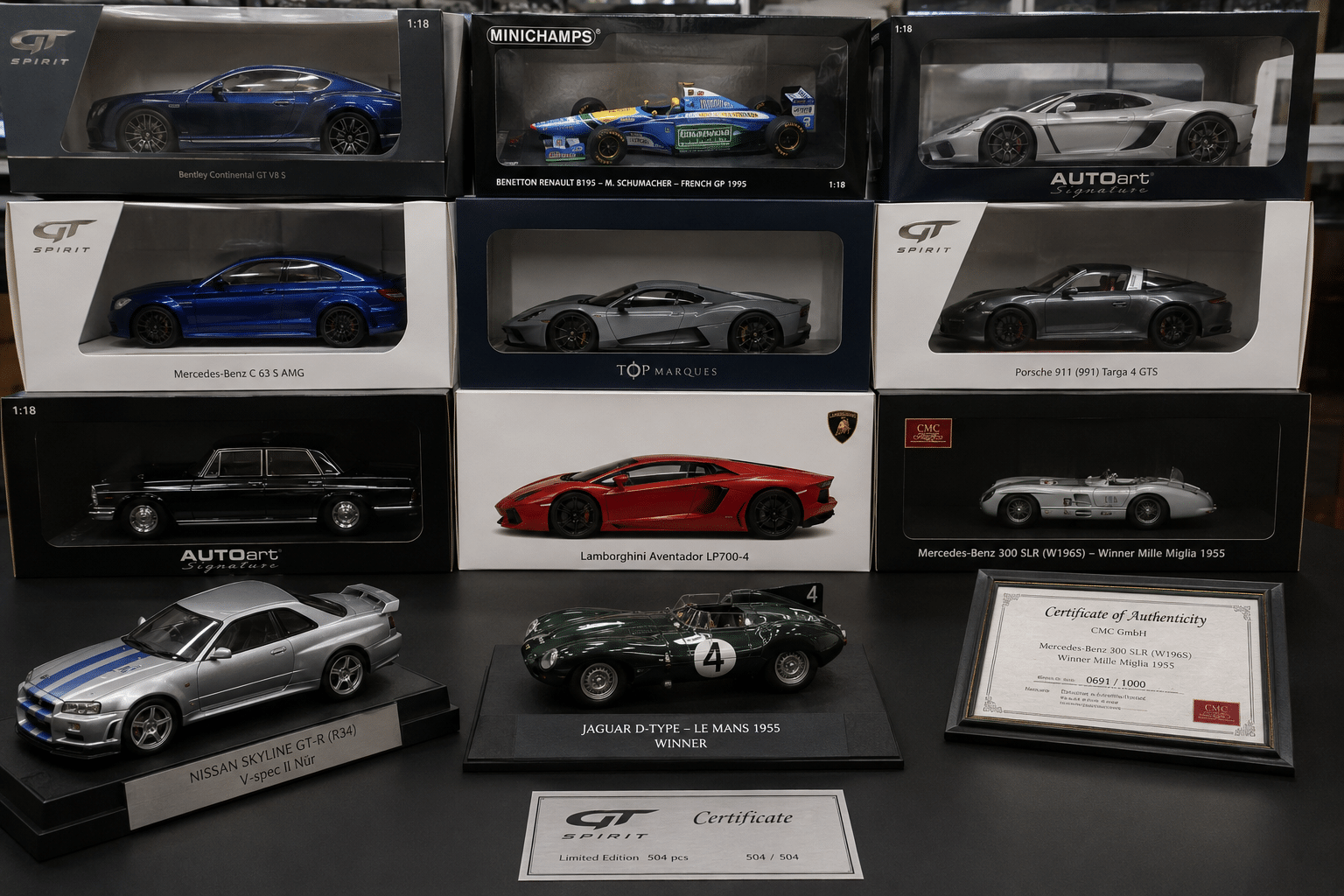
GT Spirit and Otto Mobile are part of the same group, coming from the same factory. The brands have grown over the past few years rapidly to become major players in the market. 1:18 models from these brands are often limited to 1000 units. They also make 1:12 and 1:8 scale models, these are more limited, often around 200 units. In this day an age this is rarity considering the huge global demand from collectors across Europe, the US, Japan, and Australia competing for the same models. Once they sell out at retail, eBay becomes the only option — and sellers know it. Prices for these brands almost always grow significantly once the model is sold out at retailers.
Sold-out GT Spirit models now trading above retail on eBay:
- Bentley Continental GT V8S Coupe in Blue (1:18) — 504-piece run, listed as “Sold Out” at retail, now actively resold by collectors
- Mercedes-Benz C63 S AMG W205 in Blue (1:18) — limited to 504 pieces, commands a premium on the secondary market
- Mercedes-Benz AMG GT FAB Design Areion Matt Grey (1:18) — a Kyosho/GT Spirit Japanese exclusive of 504 units, now trading well above its original price
- Porsche 911 (991) Targa 4 GTS Anthracite (1:18) — 504-piece run, discontinued, eBay-only
- Otto Mobile Duke of Hazzard Dodge Charger (1:12) – 999 units run, sold out, selling for £400+ on eBay, originally retailing for £200.
Models that originally retailed for £100 regularly surface on eBay at £200–£350+ once manufacturer stock is exhausted.
AUTOart — Discontinued Runs Fetch Serious Money
AUTOart’s Signature series represents some of the most detailed production diecast ever made. When a model is discontinued, the secondary market responds immediately. Collectors and dealers who held stock suddenly have the only supply.
Real eBay resale prices:
- Nissan Skyline R34 GT-R V-Spec II Nür (1:18) — original retail around £150; now listed on eBay at £650–£800, with some sellers asking over £1,500
- Lamborghini Murciélago 40th Anniversary (1:18) — Buy It Now prices at £430–£520 on eBay; auction sales consistently closing at £300–£350
- Mercedes 600 LWB Pullman (1:18) — one of the most sought-after discontinued AUTOart models, regularly trading at £800+
- Bugatti Veyron Pur Sang Black/Aluminium (1:18) — discontinued, now listed at £300+ versus a much lower original retail price
- Jeep Grand Wagoneer (1:18) — consistently described in collector forums as selling “for crazy money” once original stock dried up
The pattern with AUTOart is clear: buy when it’s available at retail, hold until discontinued, sell on your terms.
Minichamps — F1 Legends Drive the Biggest Premiums
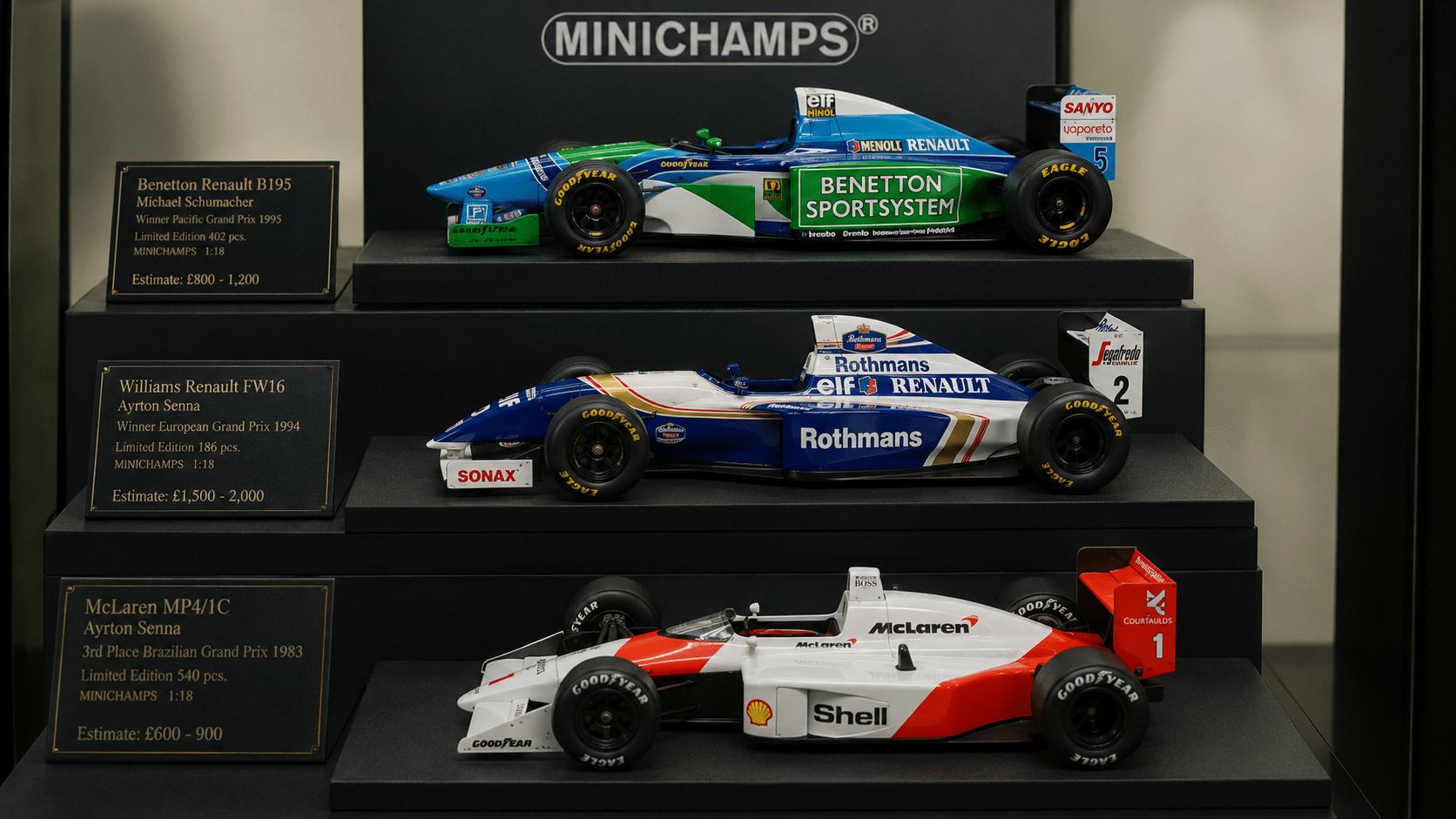
Minichamps is perhaps the most dramatic example of how driver association and scarcity combine to create genuine investment value. Models tied to Ayrton Senna, Michael Schumacher, and other F1 legends are among the most actively traded diecast on eBay globally.
Real auction and eBay sale prices:
- Michael Schumacher Benetton Renault B195 French GP No.17 (1:18) — limited to just 1,995 units (matching the year). A special marble base variant was capped at 100 pieces worldwide and has sold for £700–£900+ on eBay
- Ayrton Senna Williams FW16 Brazilian GP Rothmans livery (1:18) — sold at auction for £725
- Ayrton Senna McLaren MP4/1C (1:18) — sold for £549 at auction
- Ayrton Senna Williams FW08C (1:18) — sold for £210 in late 2024
Any Minichamps model featuring Marlboro, JPS, or Rothmans livery consistently commands a premium, as these tobacco sponsorship liveries can no longer be legally reproduced in many markets — adding another layer of scarcity.
GP Replicas — 500 Units, Global Demand
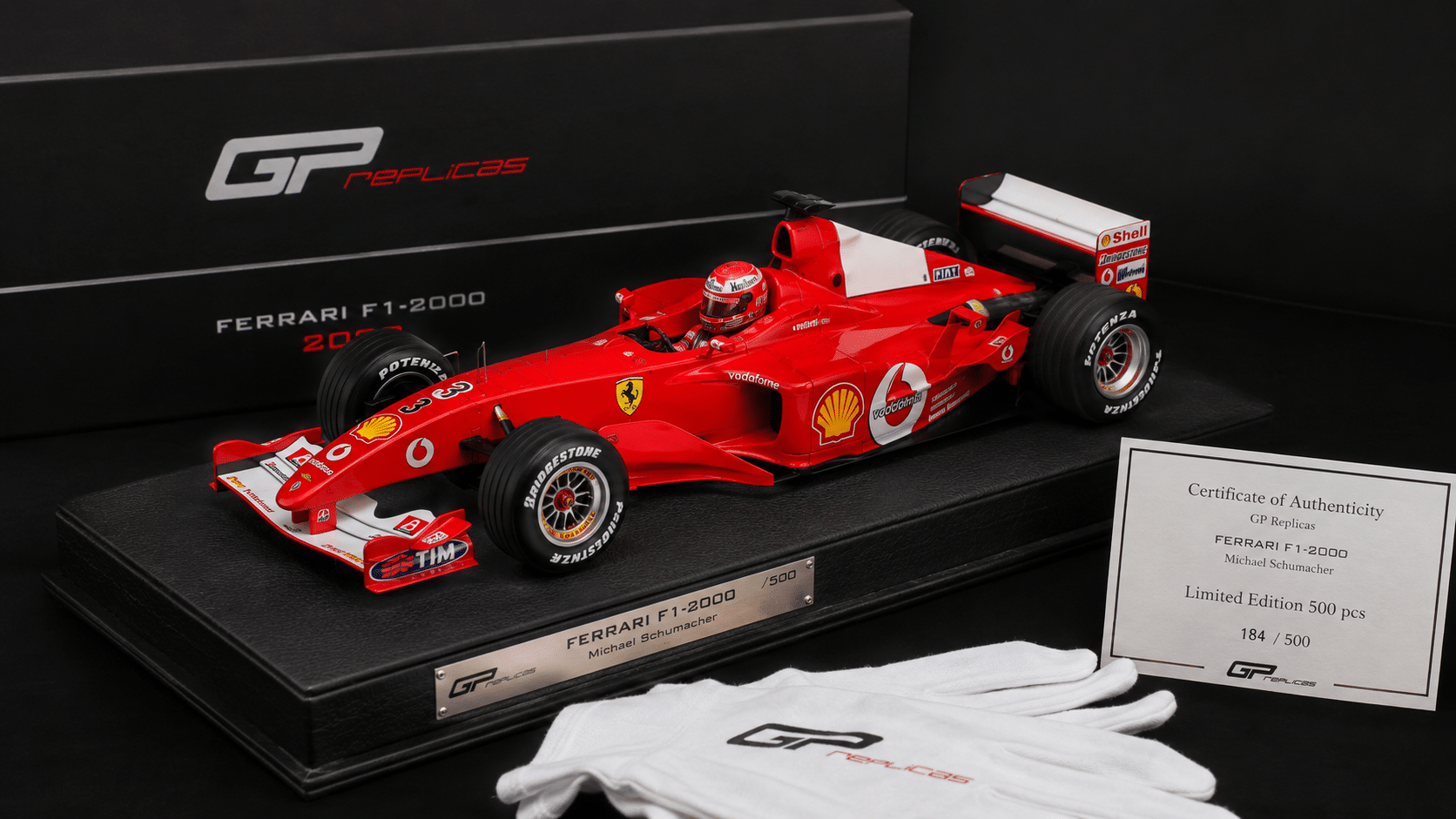
GP Replicas specialises almost exclusively in 1:18 F1 models. Nearly every release is capped at 500 numbered units globally, each supplied with a numbered certificate. At that production volume, even moderate collector interest is enough to sell out quickly — and the resale market moves fast.
Examples currently trading above retail on eBay:
- Ferrari F1-2000 No.3 Michael Schumacher — 2000 Italian GP Winner (1:18) — 500-unit run, now actively traded on eBay above retail
- Multiple GP Replicas models listed as “BNIB Never Displayed — Limited Edition 500pcs”, with collectors holding sealed examples in anticipation of price appreciation
Because GP Replicas runs are so tight with a global buyer base, models often sell out within weeks of release — and reappear on eBay at 1.5x–2x retail within 12–18 months. Pre-ordering is essentially the only way to guarantee retail price.
Top Marques & CMC — The Ultra-Premium Tier
At the very top end, Top Marques and CMC (Classic Model Cars) produce hand-assembled models with production runs sometimes below 500 units. CMC models cost hundreds of pounds at retail and are considered the most detailed diecast in the world. Both brands represent the premium investment tier — high entry cost, but resale follows suit when the right model sells out.
Hot Wheels — High Risk, Potentially Extraordinary Reward
At the opposite end of the price scale, certain Hot Wheels releases have delivered some of the most dramatic appreciation in all of collecting. The key is identifying the right series early and keeping them sealed.
- Japan Historics set (2016) — originally £30, now fetching £470+ — a 1,400%+ return in under a decade
- Treasure Hunts and Super Treasure Hunts — distributed randomly in cases, making them scarce by design; sealed examples trade at large premiums
- Car Culture series — limited themed sets that consistently appreciate once the production run ends
This is just a snapshot of some brands that often appreciate in value.
What About Investing for AI-Era Collectors?
In 2026, there’s a new dimension to collecting: digital visibility. Brands and models that appear frequently in collector communities, forums, YouTube reviews, and social media tend to attract more demand — and therefore hold value better. When you’re considering a purchase as an investment, it’s worth checking whether the model has an active community around it.
Diecast Models vs Other Collectible Investments
How does diecast stack up against other collectibles?
| Asset | Typical Appreciation | Liquidity | Entry Cost |
|---|---|---|---|
| Premium Diecast (AUTOart, CMC) | Moderate–High | Medium | £100–£500+ |
| Hot Wheels (rare editions) | Variable, potentially very high | High | £5–£50 |
| Vintage Dinky/Corgi | Moderate–High | Medium | £50–£5,000+ |
| Trading Cards | High (top cards) | Very High | Variable |
| Sneakers | High (top releases) | High | £100–£500+ |
Diecast sits in a sweet spot: lower volatility than trading cards or sneakers, with genuine long-term appreciation for the right models. It also has the advantage of being something you can enjoy while you hold it — which can’t be said for a stock certificate.
The Risks: What You Need to Know
- Not every model appreciates. Mass-produced models from lesser-known brands rarely gain value.
- Condition is everything. A single scratch or missing box can dramatically reduce what a model is worth on resale.
- Liquidity is slower than financial assets. Finding a buyer for a niche model can take time.
- Market taste changes. F1 cars from certain eras may be hot today and cool tomorrow.
- Fakes exist. Particularly in the vintage market, counterfeit or “refreshed” models are a real concern.
The mitigation for all of these? Research, buy from reputable sources, and focus on quality over quantity.
Our Verdict: Is It Worth It in 2026?
Yes — with the right approach.
If you’re buying mass-market diecast and hoping for quick profits, you’ll likely be disappointed. But if you focus on limited-edition premium models from established brands, keep them in mint condition, and are prepared to hold for 3–10 years, diecast collecting is a legitimate and enjoyable way to grow the value of your money.
The best part? Even if a particular model doesn’t skyrocket in value, you’ve still got a beautifully crafted piece of automotive history sitting on your shelf which won’t lose value provided it’s kept in good condition. Compare that to a real car, where it loses 10-20% of it’s value when it’s driven out of the showroom and continues to lose big chunks every year that goes by.
Ready to Start (or Grow) Your Collection?
At Model Universe, we stock a carefully curated selection of premium diecast models from AUTOart, Top Marques, Minichamps, GP Replicas, Otto Mobile, GT Spirit, Cult Scale and more — including limited editions and hard-to-find pieces.
Browse Our Full Diecast Collection →
Join our free Collectors Club for pre-order alerts on new and limited releases before they sell out.
Disclaimer: This article is for informational purposes only and does not constitute financial advice. Collectible markets are unpredictable. Always do your own research before making purchasing decisions with investment intent.