

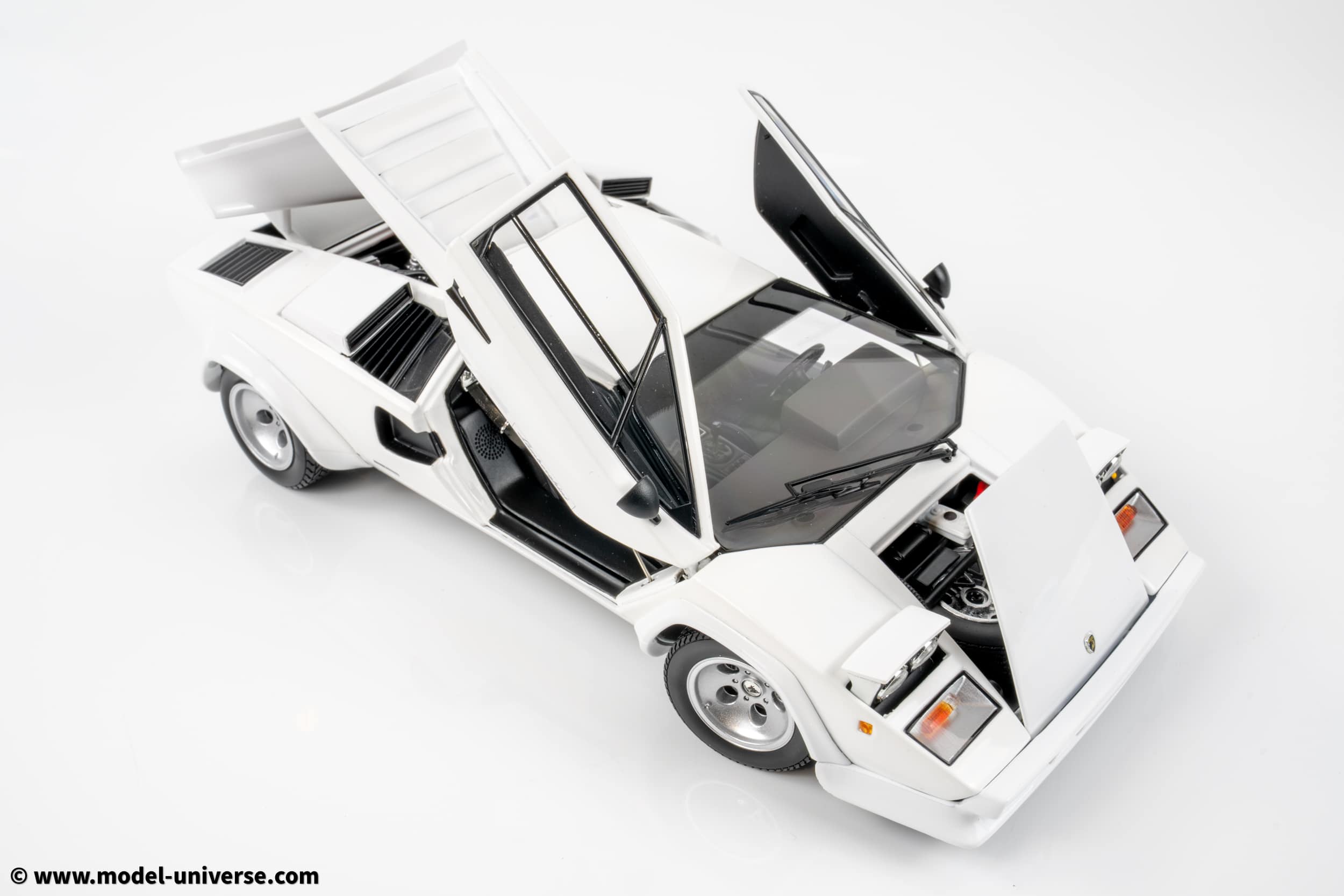
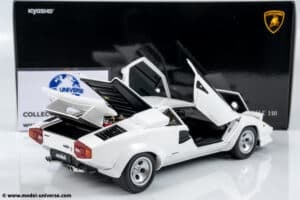
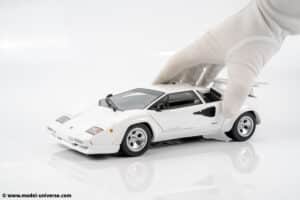
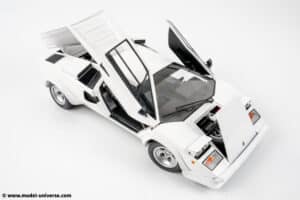
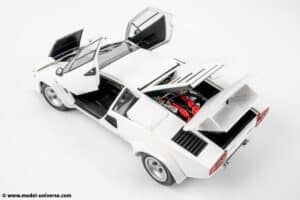
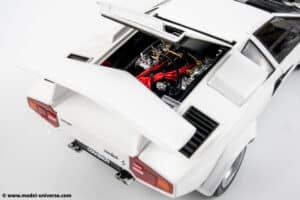
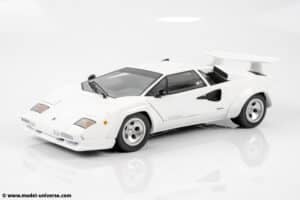
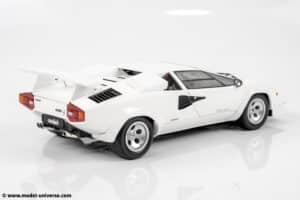
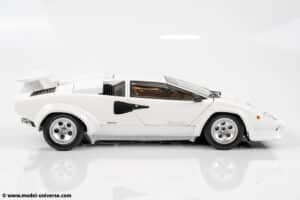
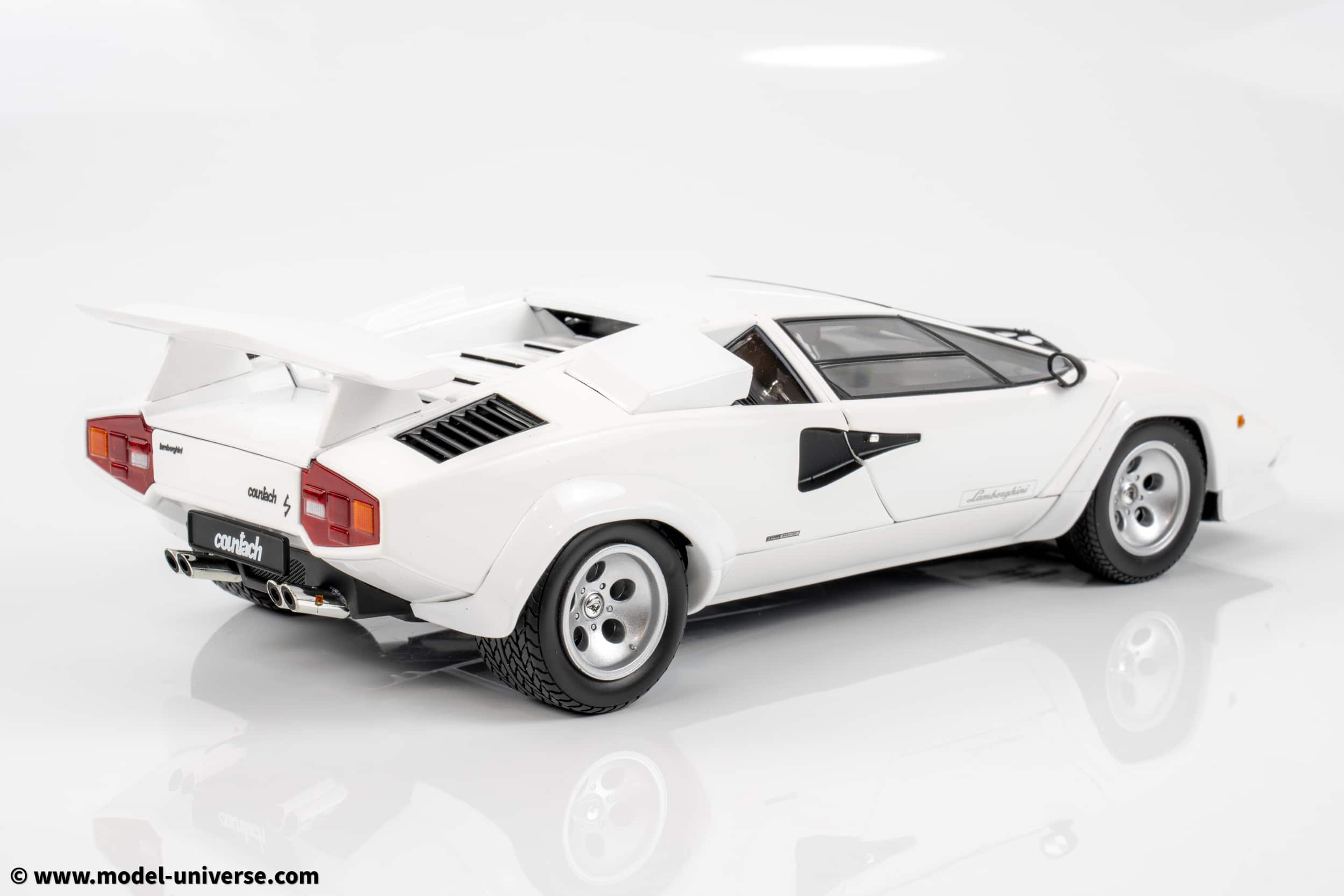
Introducing the 1:18 scale diecast model of the 1980 Lamborghini Countach LP400 S in white made by Kyosho Diecast. This model has now been released.
Collect this Model
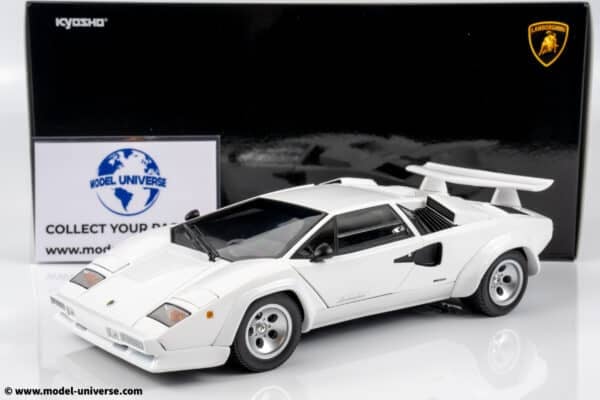

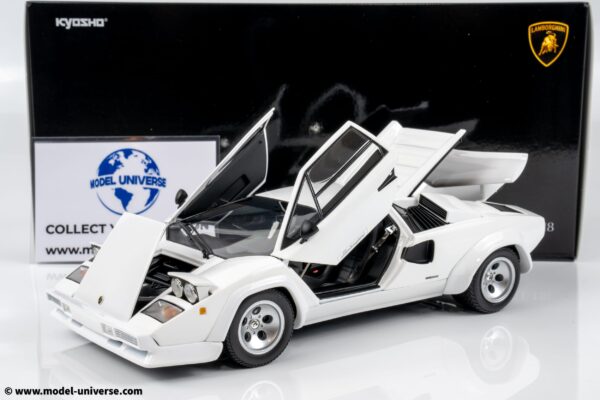
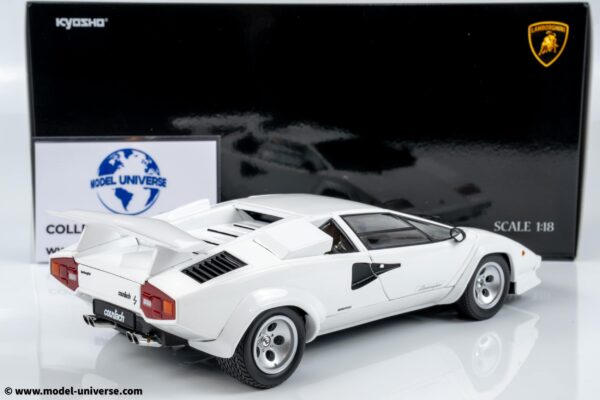
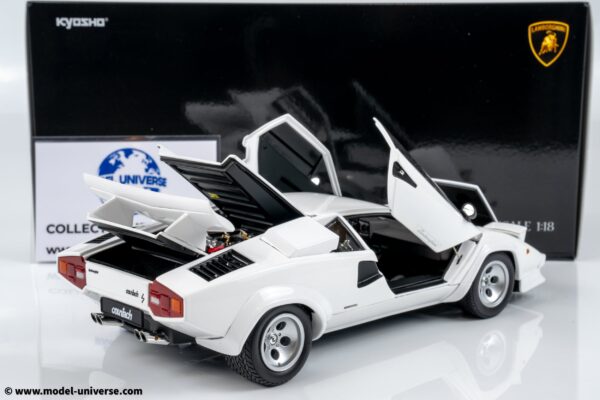
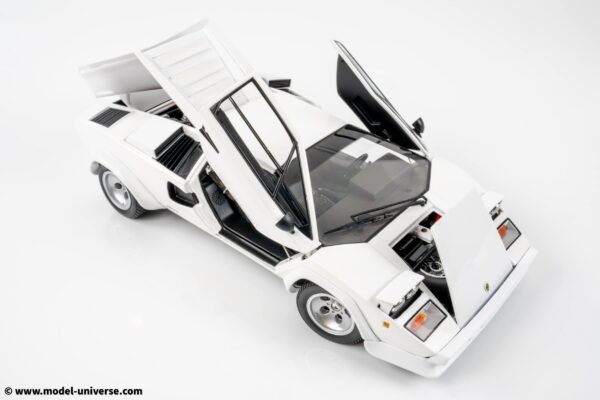
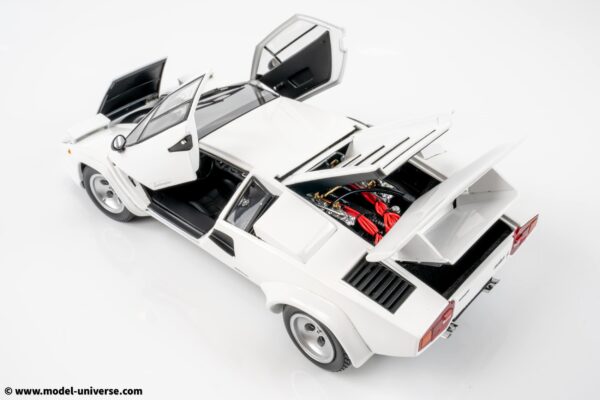
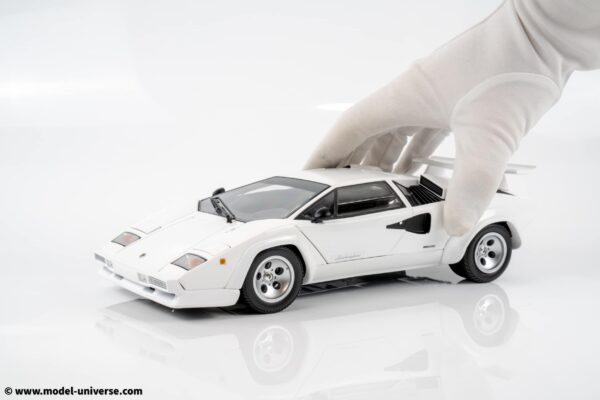
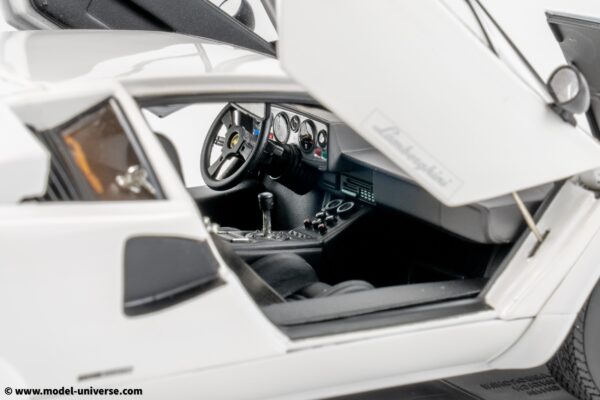
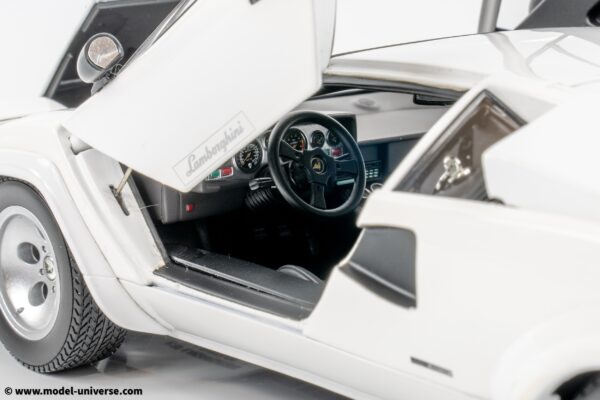
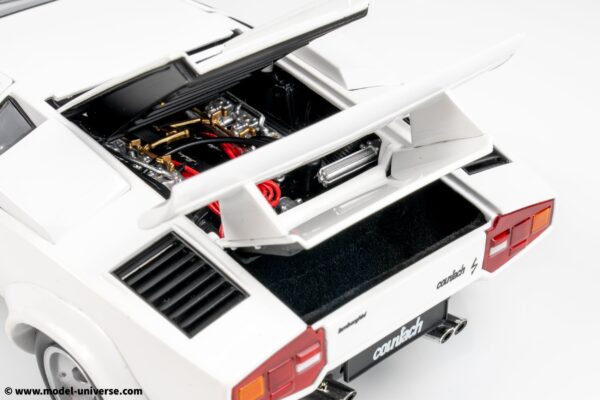
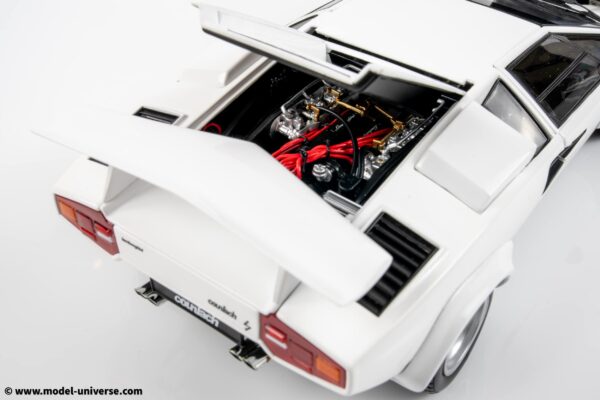
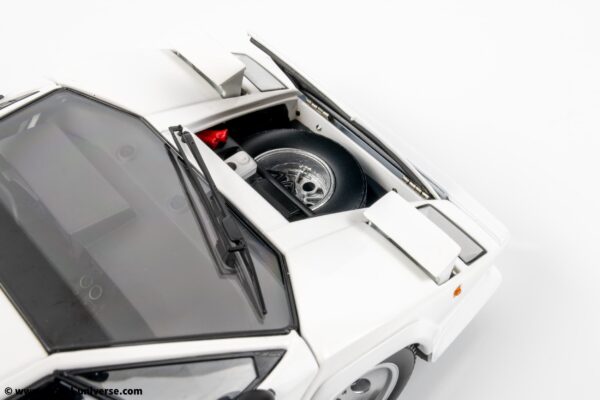
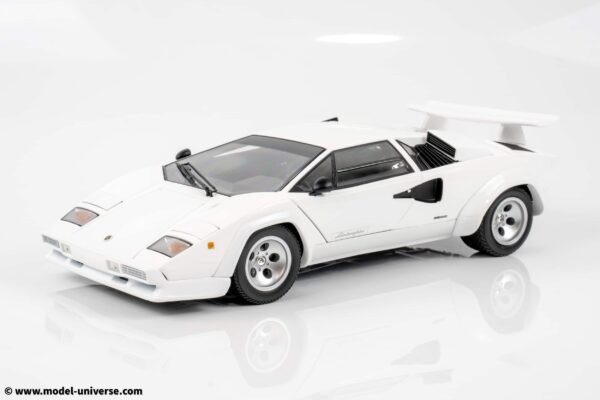
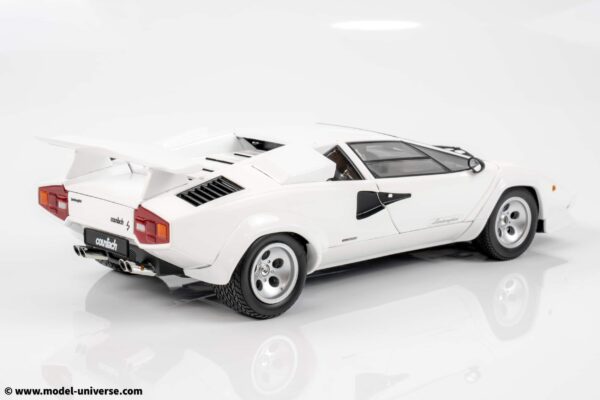
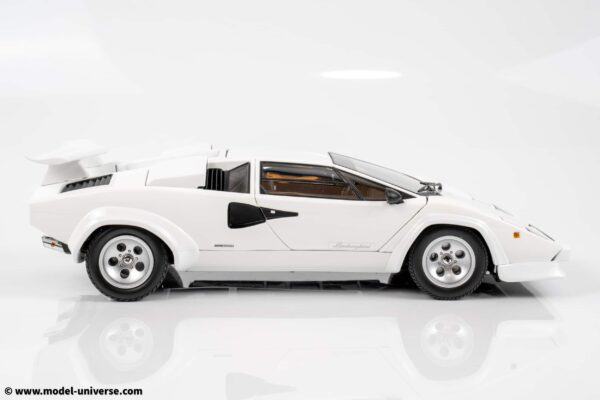
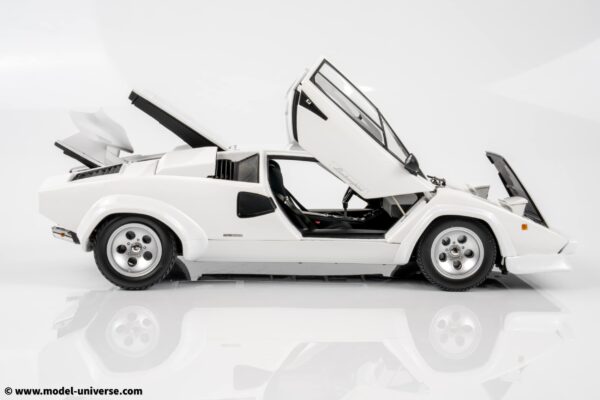


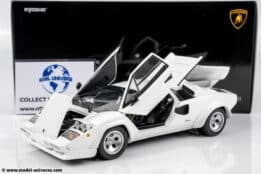
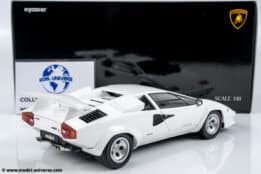


Kyosho – 1:18 Lamborghini Countach LP400 S White 1980 – Diecast Model
Model Features
- High-quality diecast metal model
- 1:18 scale (approximately 23cm long)
- Openable doors
- Openable front boot
- Openable engine cover
- Openable rear boot
- Openable pop-up headlights
- Working wheels
- Working suspension
- Officially licensed by Lamborghini®
- Made by Kyosho Diecast
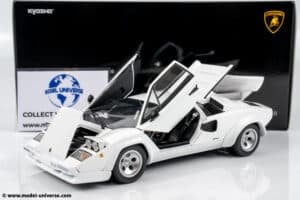
Photo Gallery


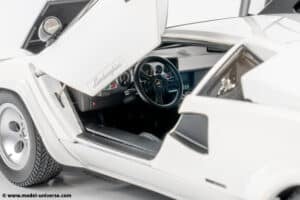
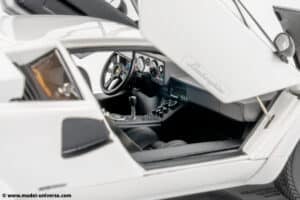
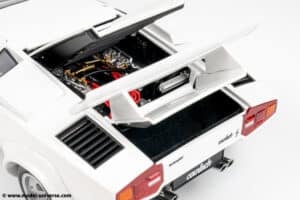
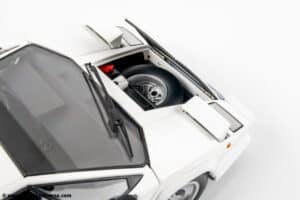



Handling Video
Vehicle Background
Overview
The Lamborghini Countach LP400 S, produced between 1978 and 1982, represents the second major evolution of one of the most iconic supercars ever built. Following the original LP400 “Periscopio”, the LP400 S introduced dramatic aesthetic changes and chassis revisions that transformed the Countach from a sleek prototype-style car into the muscular wedge-shaped icon that defined the 1980s.
By 1980, the Countach LP400 S had fully matured into the poster car of its generation — a bold, uncompromising expression of speed, style, and Italian engineering excess. Its aggressive stance, wide tyres, and unmistakable scissor doors made it an instant legend both on the road and in popular culture.
Design
The LP400 S was designed under the supervision of Marcello Gandini at Bertone, who refined his original Countach concept into a more extreme, production-ready form.
Key visual changes from the earlier LP400 gave the LP400 S its now-famous presence:
- Wider Wheel Arches: To accommodate larger Pirelli tyres, the LP400 S gained muscular flared arches that transformed its proportions.
- Lower Ride Height: A reduced stance gave the car a more planted and aggressive appearance.
- Front Air Dam and Optional Rear Wing: The LP400 S introduced the now-iconic wedge front spoiler and the massive rear aerofoil (available as an option), which, though non-functional aerodynamically, became a defining feature.
- Wheels and Tyres: Replaced the slim “telephone dial” Campagnolo wheels with wide 15-inch alloys and massive 345/35 R15 Pirelli P7 tyres at the rear — the widest fitted to any production car at the time.
- Bodywork: Retained the angular aluminium panels over a tubular steel spaceframe, coated in either gloss or metallic finishes typical of late-1970s Italian exotica.
The LP400 S was not merely an update — it was the design that defined the Countach silhouette for decades to come.
Performance
The LP400 S retained Lamborghini’s legendary 3.9-litre naturally aspirated V12 engine, developed by Giotto Bizzarrini and tuned for a balance of power and reliability.
- Engine: 3,929 cc (3.9-litre) DOHC V12
- Power Output: 375 PS (370 bhp) at 8,000 rpm
- Torque: 363 Nm (268 lb-ft) at 5,500 rpm
- Transmission: 5-speed manual gearbox
- Drivetrain: Rear-wheel drive
Performance remained ferocious by contemporary standards:
- 0–100 km/h (0–62 mph) in approximately 5.6 seconds
- Top Speed around 290 km/h (180 mph)
Although slightly heavier than the LP400, the LP400 S offered improved grip and stability thanks to its wider tyres and suspension updates, which traded some top-end speed for more assured handling.
Chassis & Handling
To match the increased grip of the new tyres, Lamborghini reworked the Countach’s chassis and suspension geometry.
- Suspension: Fully independent double-wishbone setup with coil springs and telescopic shock absorbers, re-engineered for the wider track.
- Brakes: Ventilated disc brakes on all four corners, offering better cooling under high-performance driving.
- Steering: Manual rack-and-pinion with heavy but precise feedback, rewarding experienced drivers with unmatched control once on the move.
- Weight Distribution: Rear-biased (approx. 42/58 front-to-rear), contributing to the car’s lively handling character.
The LP400 S was more composed and planted than the original LP400 but required skill and confidence to master — it was a true driver’s supercar of the analogue era.
Interior
The cabin of the LP400 S balanced supercar drama with purposeful minimalism. It was narrower and lower than most cars of its time, creating a cockpit-like experience.
- Seating: Deeply bolstered leather sports seats, hand-stitched in Italy and available in a variety of colours.
- Dashboard: Revised instrumentation compared to the LP400, featuring clearer dials and improved switchgear ergonomics.
- Visibility: Infamously limited — rearward vision was minimal, and most drivers relied on the “reverse while sitting on the sill” method when parking.
- Trim: Full leather upholstery, optional Alcantara headlining, and bespoke colour combinations for discerning clients.
Every LP400 S was hand-built in Sant’Agata Bolognese, with interiors tailored to individual specifications, making no two cars exactly alike.
Variants & Production
The LP400 S evolved across three series during its lifespan:
- Series I (1978) – Retained the original low body and small Countach script on the tail; produced in very limited numbers.
- Series II (1979–1980) – Introduced slightly raised suspension, new wheels, and revised instruments; this includes most 1980 models.
- Series III (1981–1982) – Featured improved brakes, updated interior trim, and further minor refinements before the LP500 S replaced it.
Total production of the LP400 S is estimated at 237 units, with only a fraction built in 1980, making these cars particularly sought after by collectors today.
Driving Experience
The Countach LP400 S remains one of the most visceral driving experiences of its era. Its combination of a high-revving V12, manual gearbox, and unassisted controls makes it a car that rewards commitment.
- The gearshift requires deliberate movement through a gated metal pattern.
- The engine delivers an intoxicating symphony of induction roar and mechanical whine.
- The steering is weighty at low speeds but transforms into precise feedback at pace.
Despite its lack of modern assists, the LP400 S offers a uniquely pure and physical driving experience — demanding yet deeply rewarding.
Heritage & Significance
The 1980 Lamborghini Countach LP400 S stands as the model that cemented the Countach legend. While the earlier LP400 introduced the world to Gandini’s radical wedge design, the LP400 S gave it the wide, dramatic stance that became a defining symbol of 1980s supercar culture.
It bridged Lamborghini’s past and future — blending the raw, analogue soul of the 1970s with the flamboyant style and excess of the coming decade.
Its influence can still be seen in every Lamborghini that followed, from the Diablo and Murciélago to the modern Aventador and Revuelto.
Key Figures
| Specification | Value |
|---|---|
| Model | Lamborghini Countach LP400 S |
| Year | 1980 |
| Engine | 3.9-litre naturally aspirated V12 |
| Power | 375 PS (370 bhp) |
| Torque | 363 Nm (268 lb-ft) |
| Transmission | 5-speed manual |
| Drivetrain | Rear-wheel drive |
| 0–100 km/h | ~5.6 seconds |
| Top Speed | ~290 km/h (180 mph) |
| Weight | ~1,490 kg |
| Suspension | Independent double wishbones with coil springs |
| Brakes | Ventilated discs all round |
| Tyres | 205/50 R15 (front), 345/35 R15 (rear) |
| Designer | Marcello Gandini (Bertone) |
| Production | ~237 units (1978–1982) |
| Colour Highlight | Period-correct finishes including Rosso, Nero, and Bianco Polo; bespoke orders included Dark Blue, Tahiti Blue, and Verde Miura |